
Basic Paddle Surf Trainer: A Simple Rope-Resistance Dryland Paddle Setup
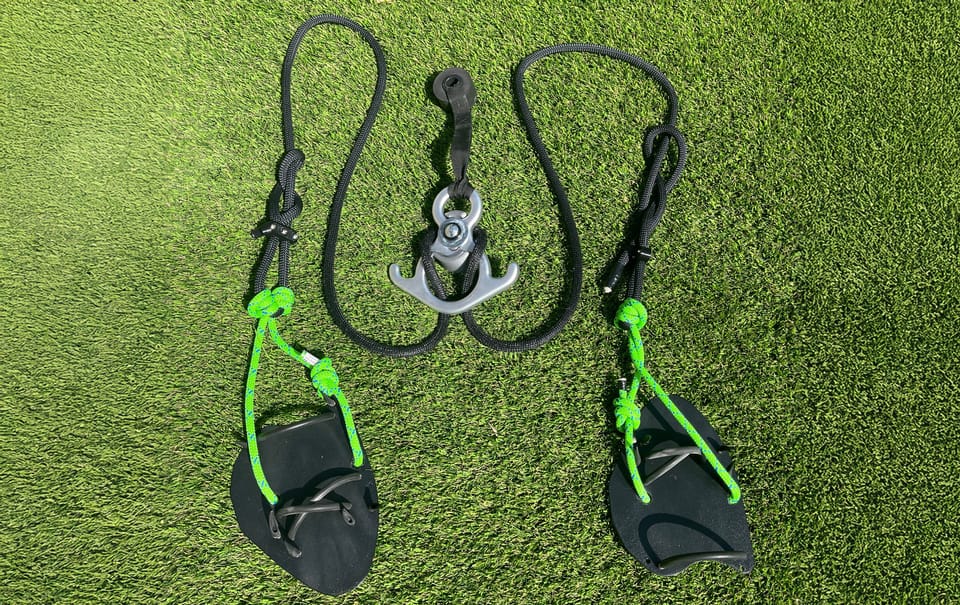
I’ve been experimenting with a homemade dryland paddle trainer designed to help maintain paddling strength, rhythm, and endurance when I’m not in the water. This is the first version of what I’m calling the Basic Paddle Surf Trainer.
The idea is simple: create a compact resistance system that simulates the pulling motion of surf paddling using rope friction instead of bands, weights, or pulleys.
I’ve been using this version for around six months, and so far it has worked surprisingly well. It is still very much a prototype, and I already have improvements planned for the next version, but the basic concept has proven useful enough that I wanted to document it.
Why Rope Resistance?
Most dryland paddle trainers use resistance bands. Bands are simple and effective, but the resistance changes throughout the stroke. The farther the band stretches, the more resistance it creates. That can be useful for some exercises, but it does not always feel like the steady pull of paddling through water.
For this trainer, I wanted something that would maintain load across more of the stroke.
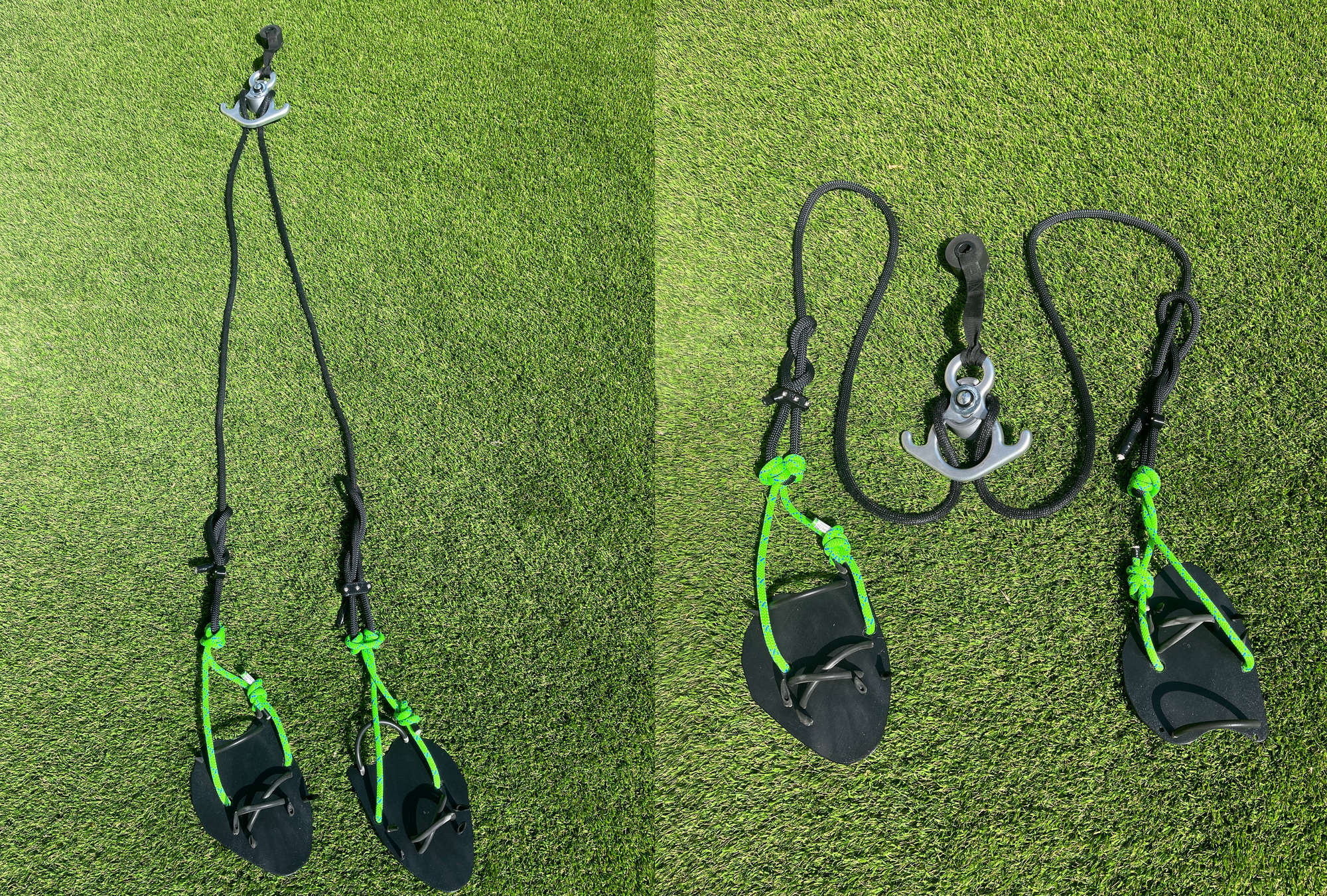
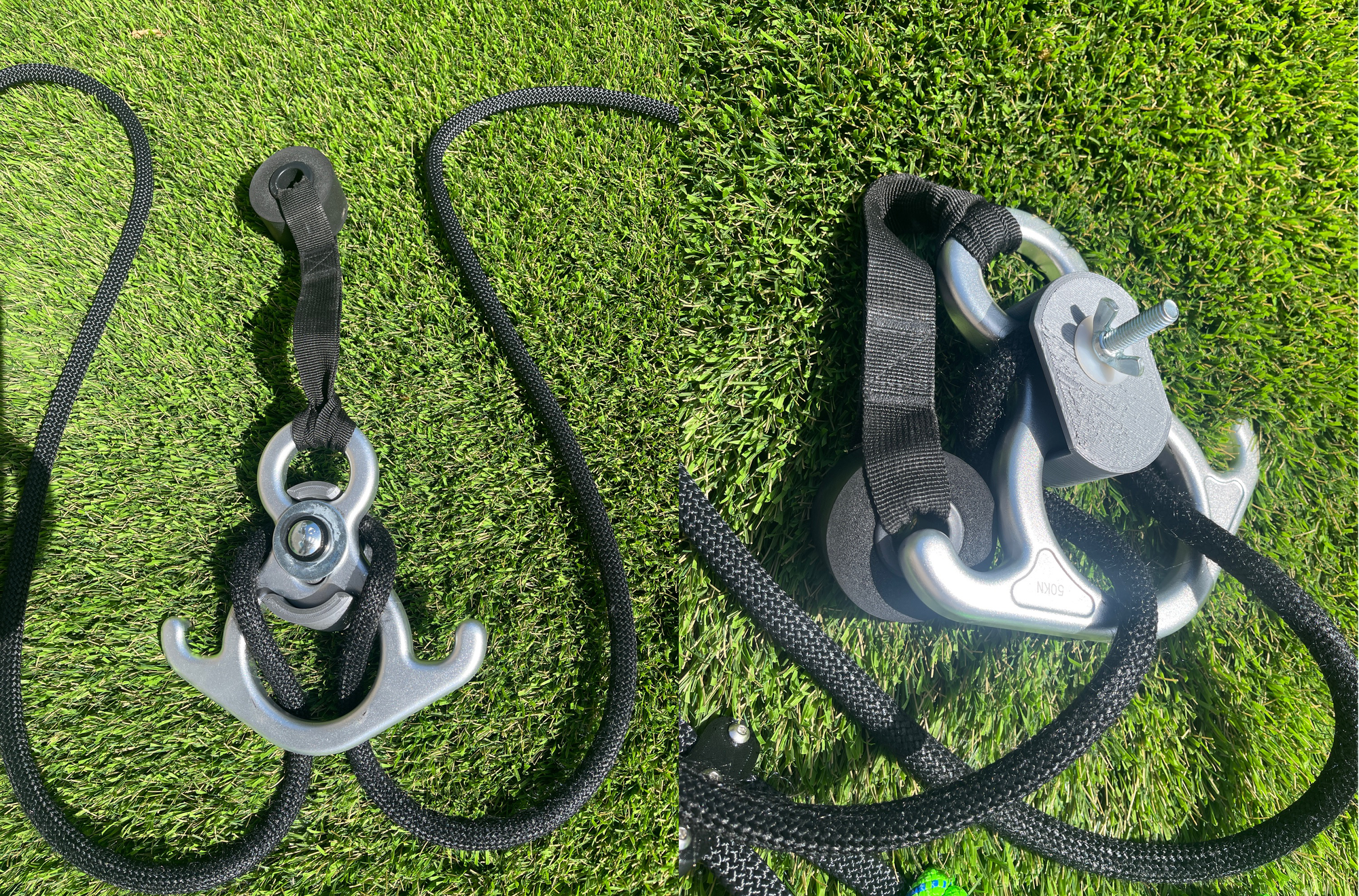
The Basic Paddle Surf Trainer uses rope friction resistance. The rope runs through a figure 8 descender and a custom resistance assembly, creating drag as the paddles are pulled. This gives the stroke a smoother, more consistent load from the catch through the pull.
It does not perfectly replicate paddling in the ocean, but it gives a very usable resistance curve for building paddle strength and endurance.
Main Components
The trainer uses a mix of climbing-style hardware, rope, cord, and custom 3D printed parts.
Hardware and rope
- 10.5 mm static climbing rope
- 50 kN / 11,000 lbf figure 8
- 8 mm prusik cord
The figure 8 is the main friction device. The static rope provides the primary resistance path, while the prusik cord is used for adjustable attachment and control points.
3D printed parts
The custom printed parts include:
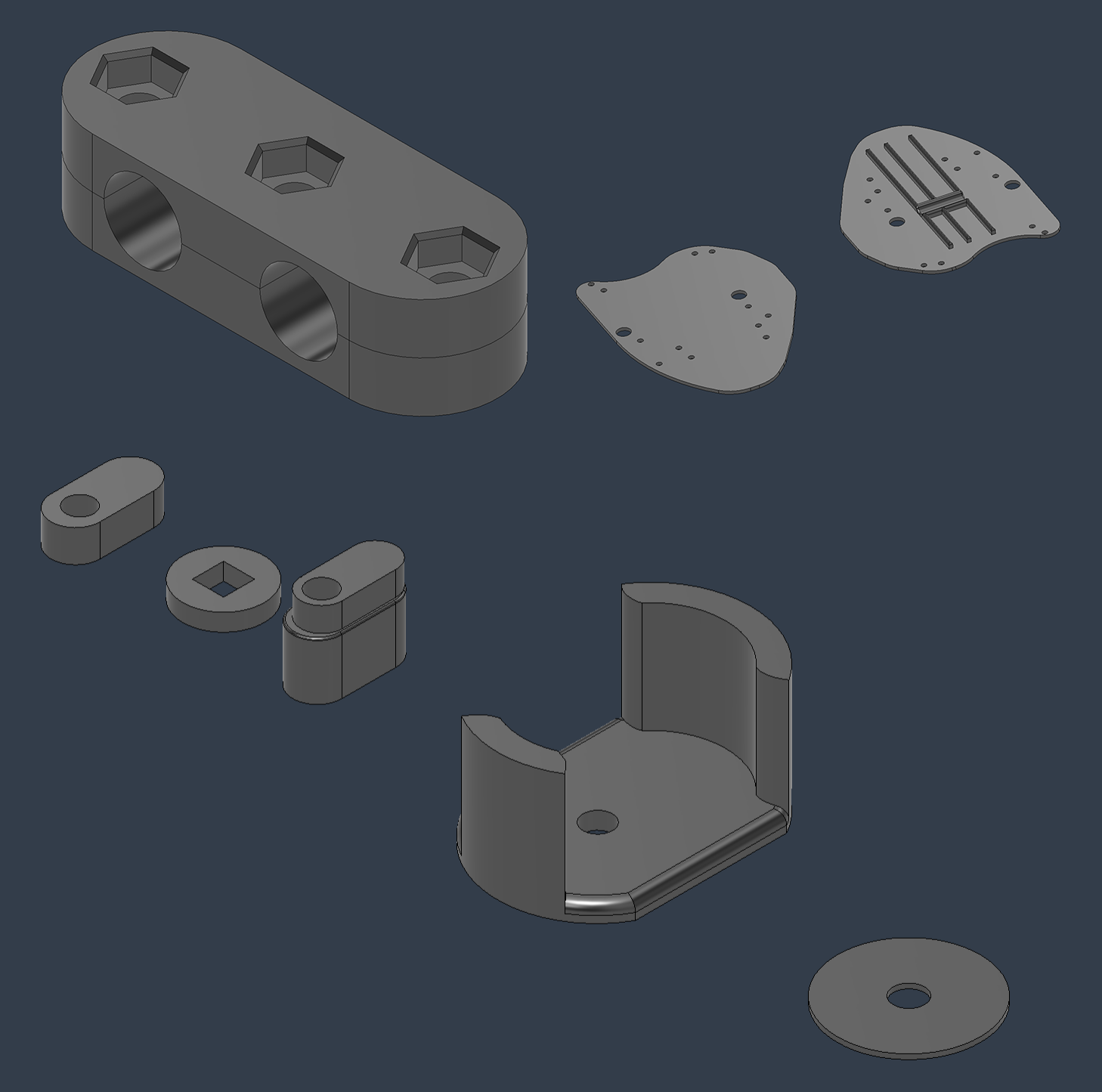
- Hand paddles
- Rope lock
- Rope resistance assembly
The hand paddles are modeled after swimming resistance paddles. They give the hands a more paddle-like platform instead of simply gripping a handle or rope.
The rope lock helps manage the rope position and keeps the system organized during use.
The rope resistance assembly is the most important custom part. It allows for fine-tuning the resistance beyond the baseline friction of the standard figure 8. This makes the trainer more adjustable depending on whether I want an easier endurance session or a harder strength-focused paddle workout. Metal round washers help with heat build up.
How It Works
The rope runs through the resistance system, creating friction as each stroke is pulled. The figure 8 creates the baseline resistance, while the printed resistance assembly adds additional control.
The paddles attach to the rope system, allowing each arm to pull independently in a motion that feels close to a surf paddling stroke.
Because the resistance is created by rope drag rather than elastic stretch, the load stays more consistent throughout the movement. That is the main advantage of this design.
The result is a simple system that lets me train:
- paddle endurance
- shoulder and lat engagement
- stroke rhythm
- left/right balance
- pulling strength through the full paddle motion
Hand Paddle Design
The hand paddles are modeled after swim training paddles. They are wide enough to give a realistic pulling surface but simple enough to print and modify.
The current version is functional, but I already see areas for improvement. Future versions may include better ergonomics, smoother edges, improved strap routing, and possibly different paddle sizes for different resistance levels.
For a first version, though, they have worked well. They are simple, durable enough so far, and they give the trainer a much better feel than pulling on a rope alone.
Resistance Tuning
One of the best parts of this setup is the ability to fine-tune the resistance.
The figure 8 alone provides a good base level of drag, but the custom resistance assembly lets me increase or adjust the load. This gives the trainer more range than a fixed rope-through-hardware setup.
That adjustability is important because not every session has the same goal. Some days I want light, smooth repetition. Other days I want more resistance and shorter sets.
The goal is not maximum resistance. The goal is a controlled pull that feels useful for surfing.
Six Months of Use
After about six months of use, the Basic Trainer has held up well.
So far, the concept feels solid. The rope resistance gives a smooth pull, the figure 8 works well as the main friction point, and the printed parts have been good enough for regular testing.
There are still improvements I want to make, but this first version has already become a useful part of my surf training setup.
The main thing I like is that it gives me a way to train the paddle movement directly. General fitness helps with surfing, but paddling is specific. This trainer gives me a way to work on that motion when I cannot get in the water.
Planned Improvements
This is only version one. The next version will likely focus on refinement rather than a complete redesign.
Possible improvements include:
- smoother rope routing
- better hand paddle ergonomics
- improved rope lock design
- cleaner resistance adjustment
- more compact resistance assembly
- better attachment options
- stronger or cleaner printed parts
- easier setup and teardown
I may also experiment with different rope diameters, alternate friction paths, and different paddle shapes.
Final Thoughts
The Basic Paddle Surf Trainer is a simple prototype, but it has been a successful one.
It combines common rope hardware with custom 3D printed parts to create a compact dryland paddle trainer that uses rope friction instead of elastic resistance. The result is a smooth, adjustable pull that feels useful for surf paddle training.
It is not meant to replace time in the water, but it is a good tool for staying paddle-ready between sessions.
For a first version, I’m happy with it.
More improvements are planned, but after six months of use, the basic idea works.